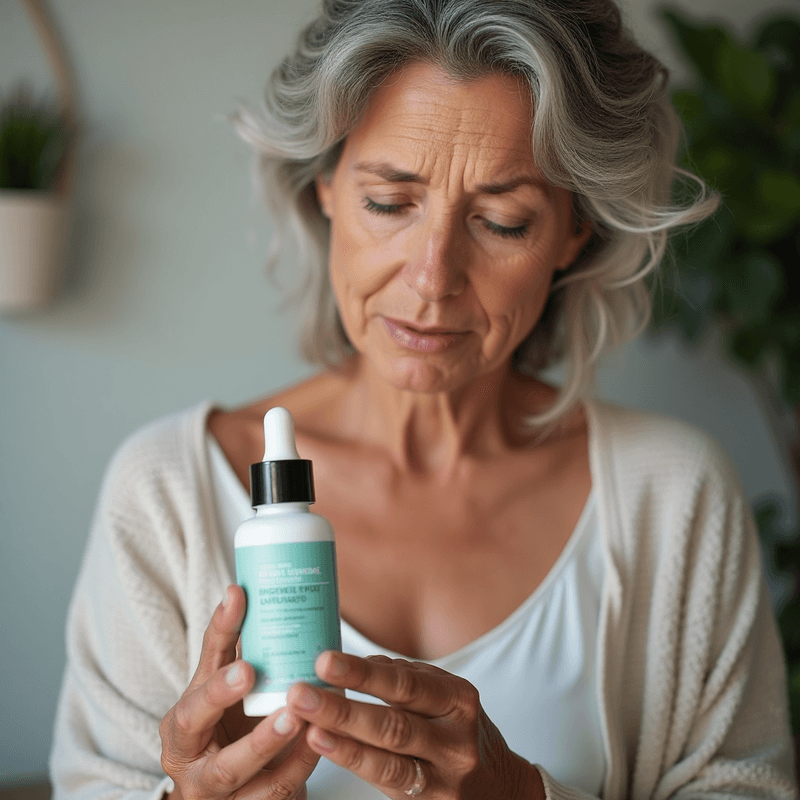
You’re standing in the aisle, holding a moisturiser in a pretty green box.
The label is covered in words that are supposed to make you feel good: “Clean.” “Green.” “Eco-Friendly.” “Pure & Natural.”
But a little voice in your head asks, “…Is it, though?”
You want to make a good choice. A choice that’s better for your skin, for your health, and for the planet. But you’re tired of the confusing jargon, the vague promises, and the nagging suspicion that you’re just being sold a story by a clever marketing team.
You’re right to be skeptical.
Let’s Be Honest: Most “Green” Claims Are Just Marketing Fluff.
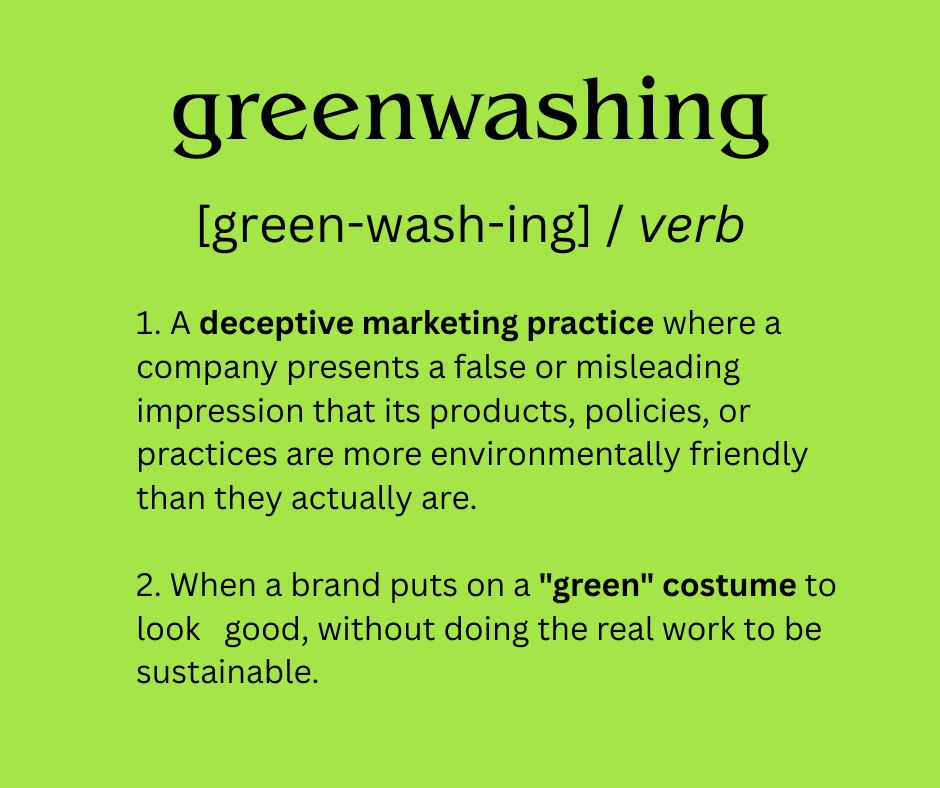
This feeling of being misled has a name: greenwashing. It’s the practice of making a brand appear more sustainable and natural than it actually is.
Brands use earthy colours, leafy logos, and buzzy words to create an eco-friendly illusion, while still using questionable ingredients or unsustainable packaging. It makes it almost impossible for you to tell the good guys from the bad.
But you don’t need a science degree to spot a genuinely conscious brand. You just need to know which questions to ask.
The No-Fluff Checklist: How to Spot a Truly “Clean & Green” Brand
Instead of a long list of research tasks, here are the three non-negotiable questions that cut through the marketing noise. If a brand can’t give you a clear, confident “yes” to all three, you should probably walk away.
1. Do they show you what’s IN the bottle (and what’s NOT)?
A truly clean brand is transparent. They don’t hide behind confusing terms. They proudly tell you what they use and, just as importantly, what they leave out. You should be able to easily find a clear, full ingredient list and a strong “free-from” promise (like being 100% paraben-free, sulfate-free, and free from synthetic fragrances).
2. What happens to the bottle when you’re done?
This is the question that separates the truly sustainable from the pretenders. A “recyclable” plastic bottle is not enough, as most plastic is not infinitely recyclable. Look for brands that are actively solving the packaging problem with plastic-free materials (like glass and aluminium), refill options, and return programmes that create a circular system.
3. Who are the people behind the product?
Is the brand run by a massive, faceless corporation, or by real people who are passionate about what they do? A truly ethical brand is transparent about where its ingredients come from. Look for stories about Fair Trade partnerships that support communities and ethically sourced botanicals.
Our Promise to You: An Open Book
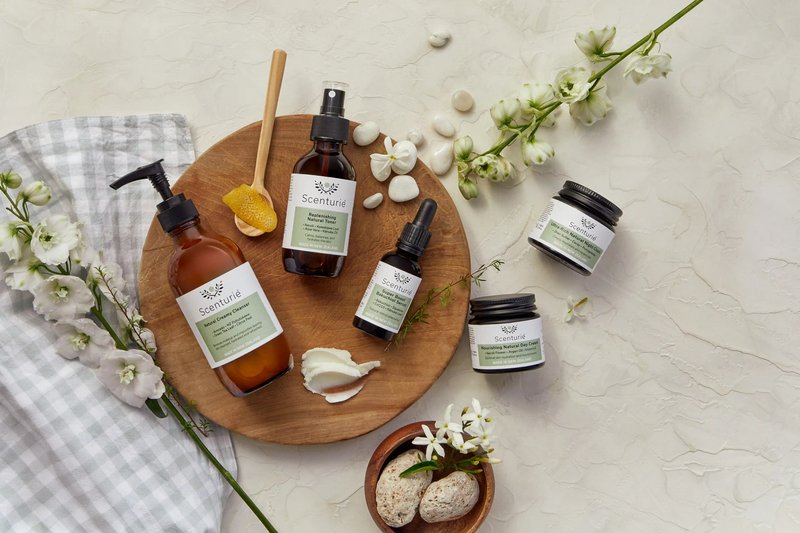
At Scenturie, we started our brand to be the answer to these questions. We wanted to create skincare you never have to feel suspicious about.
Here’s how we measure up against the checklist:
Uncompromising Purity & Transparency
Every product page on our site has a complete, easy-to-read ingredient list. We are, and always will be, 100% free from parabens, sulfates, phthalates, silicones, and synthetic fragrances.
A Circular, Plastic-Free Promise
We use infinitely recyclable glass and aluminium for our primary packaging. We offer plastic-reducing refill options for our pumps. And we take full responsibility for our packaging’s lifecycle with The Scenturie Loop, our return-and-reward programme.
Ethically Sourced Ingredients
We are built on a foundation of respect for people and the planet. From our Fair Trade Shea Butter sourced from a women’s cooperative in Ghana to our sustainably harvested NZ botanicals, we ensure our ethically sourced ingredients do good from the very beginning.
Ready to Stop Guessing and Start Glowing?
You shouldn’t have to do hours of research just to feel good about your skincare.
When you choose Scenturie, you’re choosing a brand that has already done the work for you. You’re choosing proven, science-backed formulas that are as kind to the planet as they are to your skin.
You’re holding a bottle of lotion—maybe even your favourite one—and you flip it over to scan the ingredients. You see the usual suspects… Water, Glycerin… and then you see it. Methylparaben.
A little red flag goes up in your mind. You’re sure you’ve heard that parabens are something you should avoid. But you’re not exactly sure why. And they seem to be in everything.
So you Google it, and you fall down a rabbit hole of conflicting information. Health agencies say they’re fine in small doses. Wellness blogs say they’re the devil incarnate. It’s confusing. It’s frustrating. And all you want is to feel confident that the products you use every single day are safe for you and your family.
You’re not overreacting. You’re asking the right questions. Let’s clear up the confusion.
So, What Exactly Are Parabens? (And Why Are They in Everything?)
Parabens are a class of synthetic preservatives that have been the beauty industry’s go-to since the 1950s. Their job is simple: to stop mould, bacteria, and fungi from growing in your water-based products, dramatically extending their shelf life.
They’re cheap, they’re effective, and you’ll find them in everything from moisturisers and shampoos to makeup and sunscreen. On a label, they’re the ingredients that usually end in “-paraben,” like:
Methylparaben
Propylparaben
Butylparaben
Without a preservative, your face cream would become a fuzzy science experiment in a matter of weeks. So yes, preservatives are essential. But are parabens the right ones to be using?
The Big Debate: Are They Safe? Here’s What the Science Actually Says.
This is where the controversy begins. While parabens do their job well, a growing body of scientific evidence raises serious questions about their side effects.
1. The Hormone Question: Do they mess with your body’s balance?
The concern: The main red flag is that parabens are known endocrine disruptors. In simple terms, their chemical structure is so similar to the hormone estrogen that they can mimic its effects in your body.
What this means for you: When you disrupt your body’s delicate hormonal balance, you open the door to potential issues. Scientists have raised concerns about links to reproductive health problems and other hormonal issues. A 2008 study in the Journal of Steroid Biochemistry and Molecular Biology confirmed that certain parabens can bind to human estrogen receptors.
2. The Irritation Question: Could they be the reason your skin is so reactive?
The concern: Parabens can be a trigger for skin irritation, allergic contact dermatitis, and can worsen underlying conditions.
3. The “Forever Chemical” Question: What happens when they wash down the drain?
The concern: Parabens don’t just disappear. They wash off our skin and hair, enter our water systems, and have been found to accumulate in marine animals, from fish to dolphins.
What this means for you: The long-term impact on our precious ecosystems, especially here in New Zealand, is still being studied. But as research published in the Marine Pollution Bulletin shows, these chemicals are building up in our environment.
But Wait, Don’t Regulators Say They’re Fine?
Yes, they do. Regulatory bodies in the EU and the US currently state that parabens are safe at the low concentrations used in cosmetics.
So, who do you trust?
This is where the “precautionary principle” comes in. It’s a simple, common-sense approach to safety: if there is credible scientific doubt about an ingredient’s long-term safety, it’s smarter to avoid it.
You shouldn’t have to get a degree in toxicology just to buy a moisturiser. You deserve to feel 100% safe and confident in your choices.
Okay, I’m Convinced. How Do I Go Paraben-Free?
It’s easier than you think. You don’t need to be a chemist—you just need to be a label-reader.
Know the Names: Look for anything ending in “-paraben” on the ingredient list.
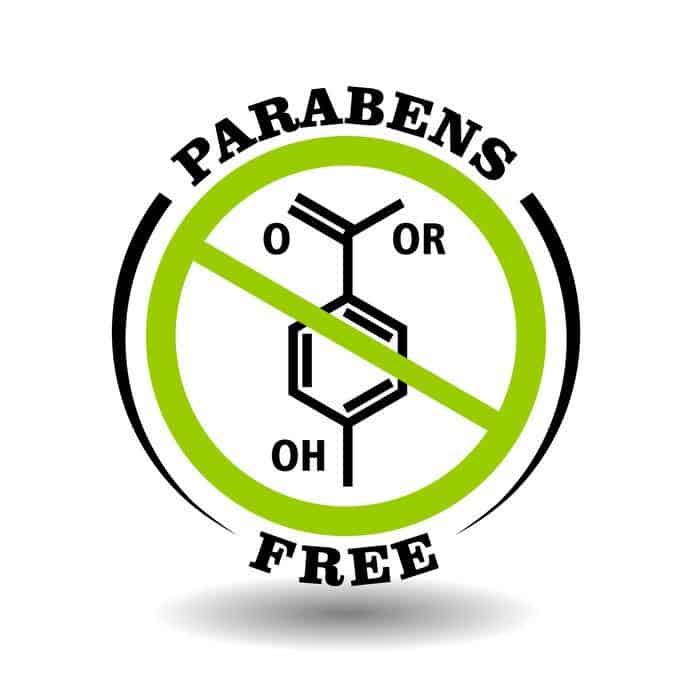
Look for the Promise: Choose brands that explicitly and proudly state they are “Paraben-Free.” This means they’ve done the work for you.
Choose Brands Built on Purity: When a brand’s entire philosophy is built on using gentle, natural, and non-toxic ingredients, you can be confident that parabens were never even an option.
At Scenturie, we are—and always have been—100% paraben-free. It’s a non-negotiable part of our commitment to you. We use modern, plant-derived, Ecocert-approved preservatives that keep your products safe without any of the worry.
Frequently Asked Questions About Parabens
Q: Are parabens in sunscreen safe?
A: While regulatory bodies permit their use, the main concern with parabens in any leave-on product is their potential as endocrine disruptors. For peace of mind, many people prefer to choose paraben-free sunscreens. Mineral-based sunscreens that use zinc oxide or titanium dioxide are an excellent and effective paraben-free alternative.
2. Q: Can parabens cause or worsen acne?
A: There isn’t a direct scientific link showing parabens cause acne. However, since parabens can be irritating to the skin, they have the potential to trigger inflammation. As inflammation is a key factor in acne breakouts, choosing paraben-free products is a smart step for anyone with acne-prone skin.
3. Q: What is the link between parabens and eczema?
A: For skin that already has a compromised barrier, such as with eczema, the top priority is to avoid all potential irritants. While a true paraben allergy is rare, they can cause skin irritation in sensitive individuals. Therefore, people with eczema are often advised to choose paraben-free formulas to minimise the risk of a flare-up.
4. Q: Are all “natural” products automatically paraben-free?
A: No, not necessarily. The term “natural” is not regulated in the beauty industry. While most reputable natural brands (like Scenturie) are proudly paraben-free, some brands may use the “natural” label while still including synthetic preservatives. The only way to be 100% sure is to read the ingredient list or look for a clear “Paraben-Free” statement on the packaging.
5. Q: I’m pregnant. Should I be more concerned about parabens?
A: Many people choose to be extra cautious during pregnancy. The primary concern is the potential for parabens to act as endocrine (hormone) disruptors. While the risk from the low concentrations in skincare is debated, adopting the “precautionary principle”—avoiding anything with a shadow of a doubt—is a very common and understandable approach. We always recommend discussing any specific ingredient concerns with your doctor or Lead Maternity Carer (LMC).
The Bottom Line? You Deserve Peace of Mind.
The debate over parabens will likely continue. But you don’t have to wait for a final verdict.
You can choose products that give you total peace of mind, right now. Choosing paraben-free is a simple, powerful step you can take to protect your health, calm your skin, and feel good about the products you bring into your home.
Ready to explore a range of beautiful, effective, and 100% paraben-free skincare?