

Updated: July 2026
For the conscious consumer in New Zealand, the definition of “sustainable beauty” is rapidly evolving. While choosing recyclable glass packaging and seeking cruelty-free, vegan formulations remain essential foundational steps, a deeper, more profound environmental shift is occurring. Today, true sustainability requires us to evaluate the life cycle of our ingredients long before they ever reach the formulation laboratory.
At Scenturie, we are proud to be leading the way in New Zealand’s circular beauty movement. Rather than relying solely on newly harvested resources, we are actively shifting the skincare paradigm by championing the use of upcycled ingredients. By integrating high-performance, nutrient-dense byproducts from the food and beverage industries into our award-winning range, we prove that luxury pro-ageing skincare can be profoundly effective while leaving a lighter footprint on the earth.
What is Upcycled Beauty and Why Does it Matter?
Upcycling, also known as creative reuse, is the process of intercepting high-quality, nutrient-rich materials that would otherwise be discarded as waste and elevating them into something of superior value. In skincare, this means rescuing the potent seeds, skins, and pulp left behind during fruit juice, wine, and beverage manufacturing.
While traditional recycling downcycles materials into lower-grade formats, upcycling captures nature’s most active compounds at peak freshness, transforming overlooked side-streams into premium, bio-available botanical actives.
The Environmental Impact of Circular Ingredients
Adopting a circular model directly addresses some of the beauty industry’s greatest ecological challenges:
Waste Mitigation: It diverts tonnes of organic agricultural matter from landfills, where it would otherwise decompose and generate harmful greenhouse gases.
Resource Preservation: It maximises the utility of existing crops. By utilising byproducts, we drastically reduce the demand for “virgin” raw materials, saving the land, water, and energy required for new cultivation.
A Lower Carbon Footprint: The energy footprint required to cold-press and refine a sustainably reclaimed seed byproduct is significantly lower than that of cultivating and processing a new harvest from scratch.
From Food Byproducts to Advanced Actives: How Upcycled Oils Are Manufactured
A common misconception is that upcycled ingredients are inferior or “used.” In reality, the manufacturing process is an exact science that preserves maximum botanical integrity:
Reclamation: Immediately following fruit pressing or winemaking, the pristine seeds are separated from the pulp.
Drying & Cleaning: The seeds are meticulously cleaned and dried to prevent degradation or microbial growth, ensuring the nutrient profiles remain completely intact.
Cold-Pressing: The seeds undergo a mechanical, solvent-free cold-pressing method. No high heat or harsh chemicals are introduced, ensuring the fragile essential fatty acids, vitamins, and antioxidants are cleanly extracted.
Refinement: The resulting virgin oils are filtered to strict cosmetic standards, yielding lightweight, deeply penetrating lipids that are highly biocompatible with the human skin barrier.
Scenturie’s Powerhouse Upcycled Ingredients
We focus on three primary upcycled seed oils, selected for their exceptional ability to nourish, repair, and protect mature, dry, or sensitive skin types:
1. Upcycled Grape Seed Oil (Vitis vinifera)
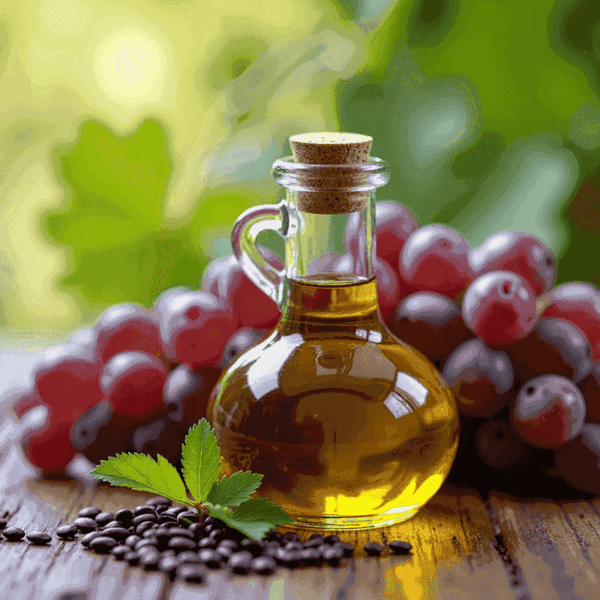
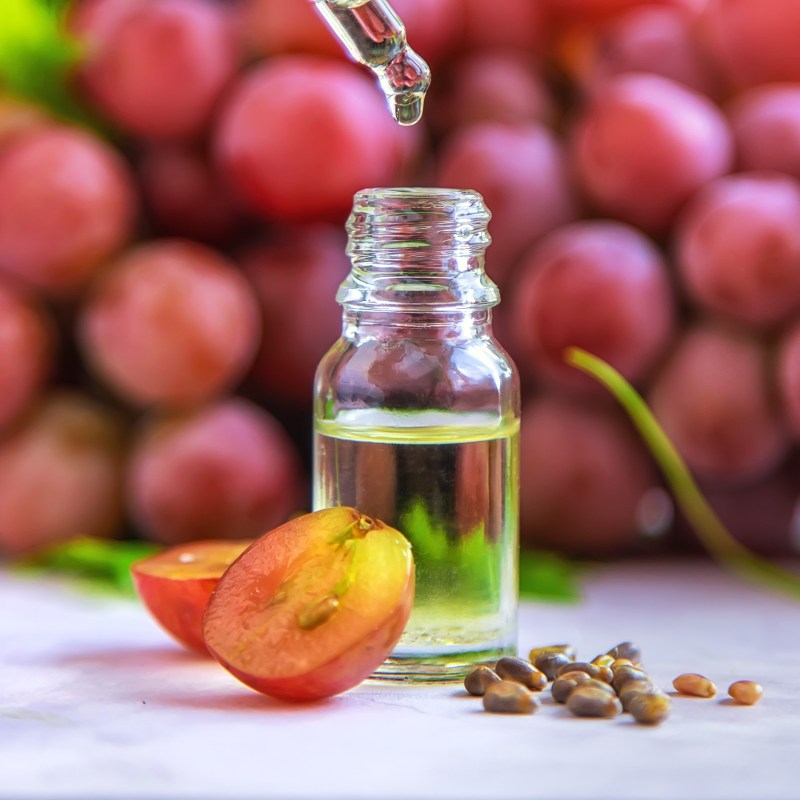
Sourcing: Responsibly reclaimed from the Douro Valley in Portugal, utilising the seed waste generated during the production of premium Port wine.
The Science: An incredibly rich source of the essential Omega-6 fatty acid, linoleic acid (67%), alongside vital minerals (zinc, selenium, calcium) and potent antioxidant polyphenols.
Skin Benefit: It acts as a lightweight, non-comedogenic structural lipid that deeply moisturises, restores stressed skin tissue, and defends against New Zealand’s harsh UV environmental factors.
2. Upcycled Apple Seed Oil (Malus domestica)
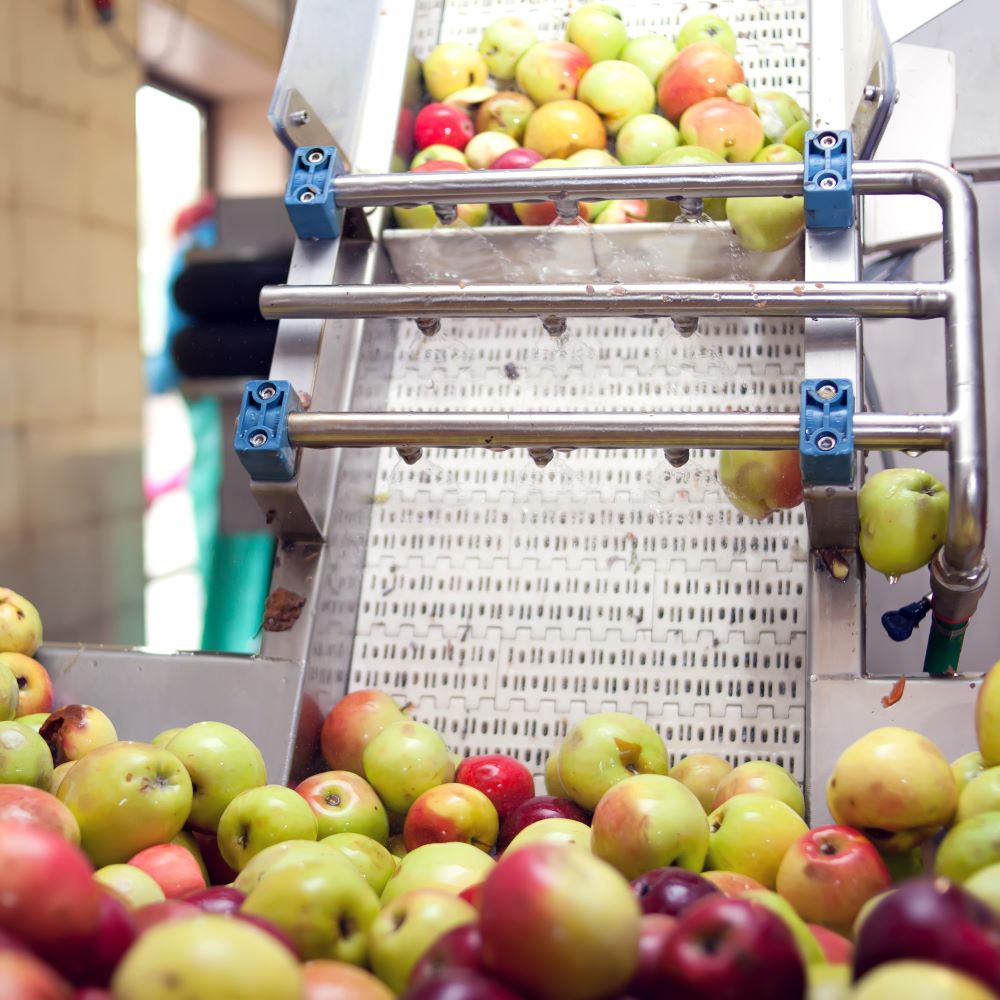
Sourcing: Diverted from the byproduct streams of apple juice manufacturing.
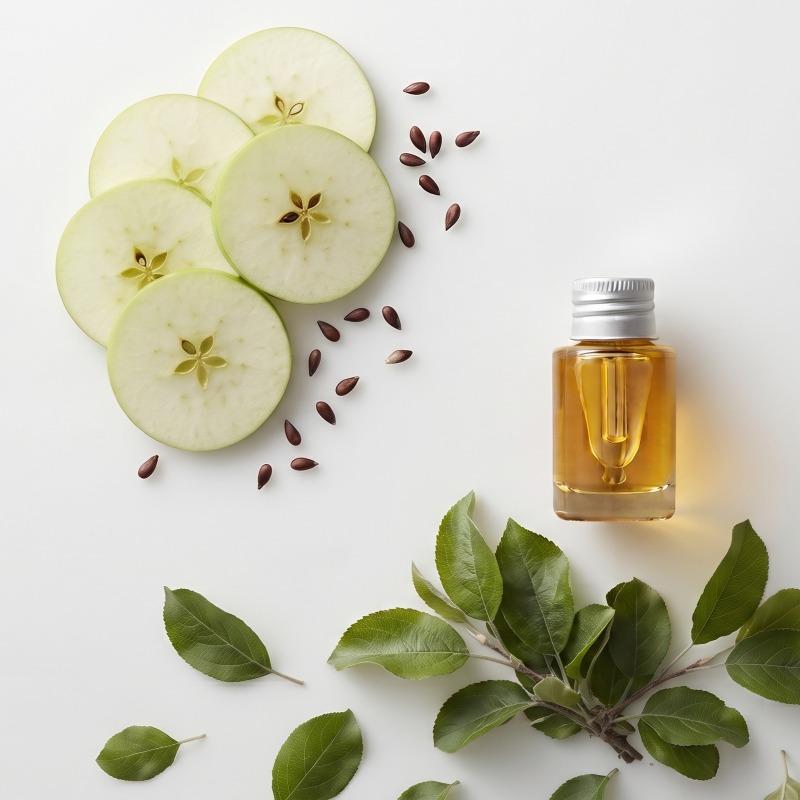
The Science: Brimming with nourishing oleic (Omega-9) and linoleic fatty acids, acting as a highly substantive, natural emollient.
Skin Benefit: Imparts a silky, non-greasy, smooth finish to the skin while leaving a subtle, comforting natural aroma. It excels at smoothing out surface texture and softening dehydration lines.
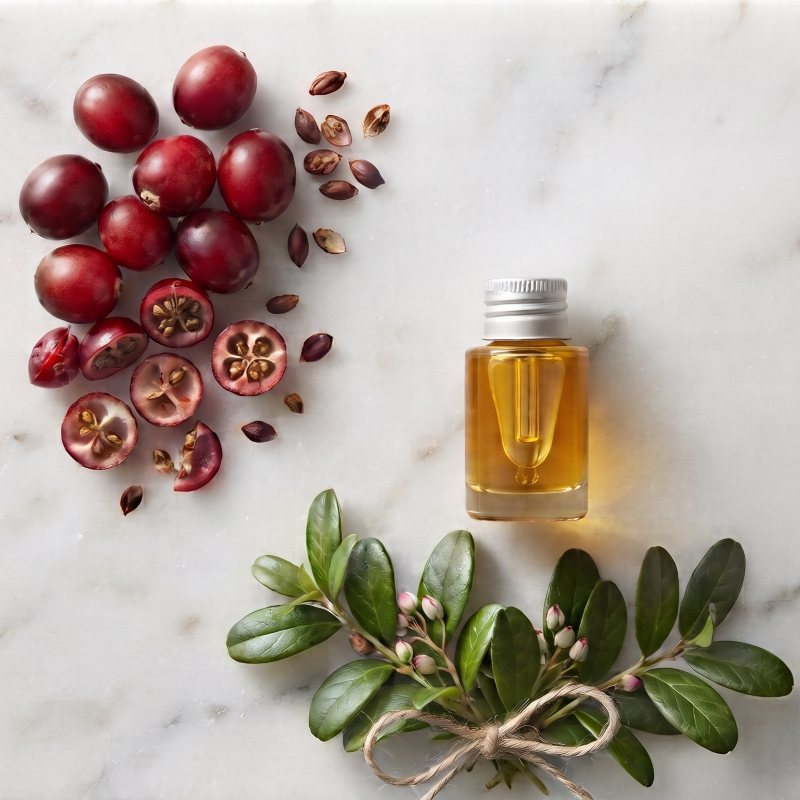
3. Upcycled Cranberry Seed Oil (Vaccinium macrocarpon)
Sourcing: Sustainably produced from the natural biowaste streams of the fruit juice and beverage industry.
The Science: Features a highly unique, near-equal ratio of Omega-6 (linoleic) and Omega-3 (alpha-linolenic) essential fatty acids, supercharged with protective phytosterols.
Skin Benefit: Offers intense skin conditioning and barrier protection, making it an exceptional defence mechanism for damaged, rigid, or prematurely ageing skin.
Formulating for the Future: The Scenturie Lineup
We don’t just use upcycled ingredients as a minor marketing trend; we weave them into the core of our brand identity.
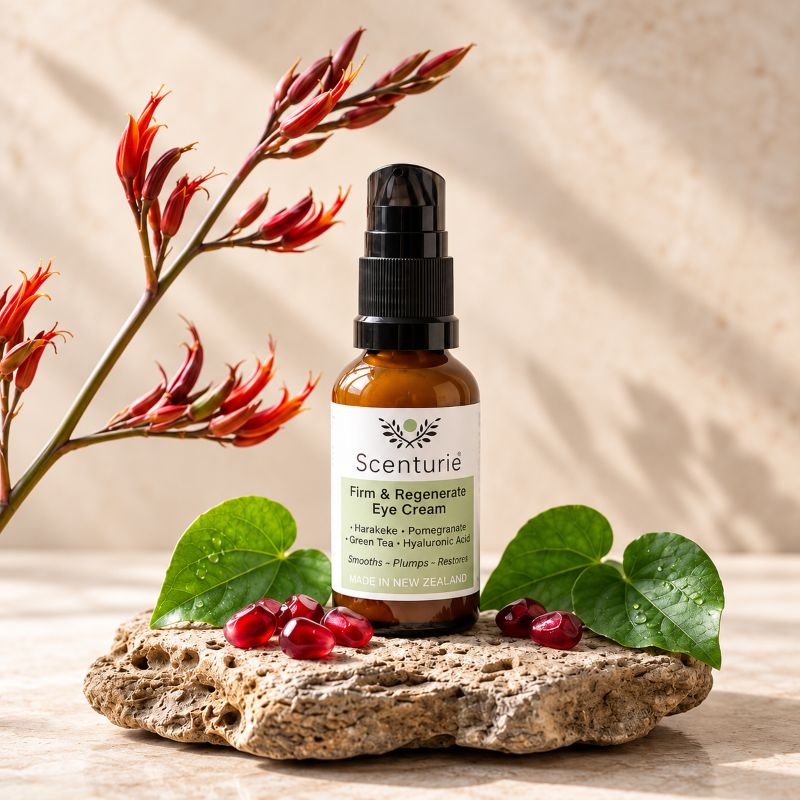
The New Benchmark: Firm & Regenerate Natural Eye Cream
Our newly evolved Firm & Regenerate Natural Eye Cream represents the absolute cutting edge of our green pro-ageing science. This advanced formula features our powerful “Upcycled Seed Trio”—combining Grape, Cranberry, and Apple seed oils in a single, high-performance treatment.
Paired with low-molecular-weight Hyaluronic Acid and native NZ Harakeke, this potent zero-waste trio provides a comprehensive “Sponge & Seal” synergy. It delivers vital linoleic fatty acids to the delicate, paper-thin eye contour, encouraging the skin to manufacture its own custom ceramides to plump creases and soothe morning puffiness without irritation.
Enriched Across Our Entire Skincare Range
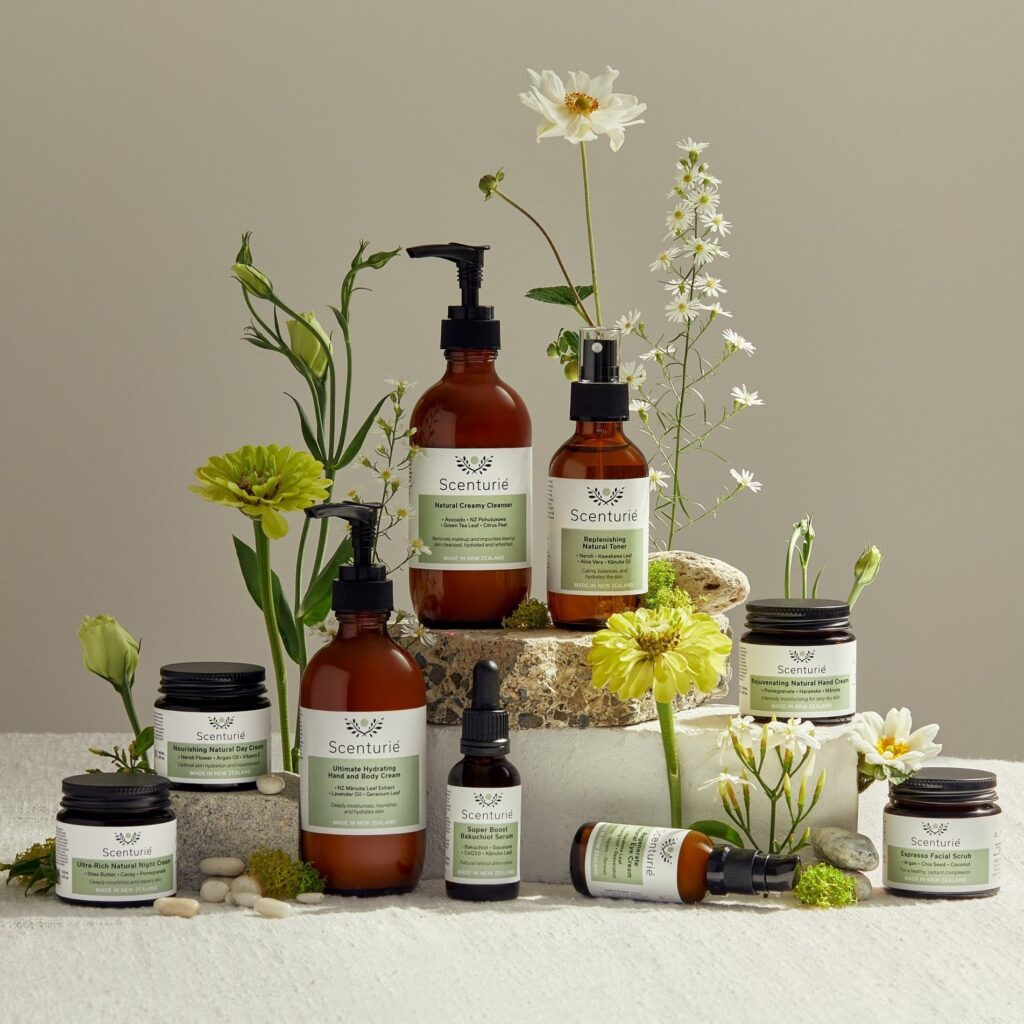
Beyond the eye area, upcycled beauty touches almost every step of the Scenturie ritual. The vast majority of our core products—including our Natural Creamy Cleanser, Revitalising Face Oil, Nourishing Natural Day Cream, and Rejuvenating Natural Hand Cream—are enriched with upcycled cold-pressed Grape Seed oil to continuously support the global circular economy while fortifying your skin barrier.
Frequently Asked Questions: Upcycled Skincare
Q: Are upcycled ingredients as safe and effective as traditional ones?
Absolutely. In many cases, they are even more potent. Because byproducts like fruit seeds are collected immediately following the primary processing of the fruit, the seeds are captured at peak freshness. Once cold-pressed and refined to high cosmetic standards, they are completely safe, stable, and highly bio-available for reactive skin types.
Q: How does upcycling support the New Zealand environment?
While we source the highest quality specialised upcycled oils globally, embracing a circular model reduces the worldwide pressure on agricultural resources and diverts organic waste from landfills. Closer to home, we mirror this philosophy through The Scenturie Loop—our circular packaging mission that allows New Zealand customers to return empty amber glass jars and bottles to us in exchange for Eco-points.
Q: Is upcycled skincare suitable for highly sensitive skin or acne?
Yes. Our upcycled oils, particularly Grape Seed oil, have a very high linoleic acid content and a fine molecular structure. This makes them incredibly lightweight, non-greasy, and quickly absorbed. They help calm reactive conditions like morning redness and support the skin barrier without clogging pores.
A New Era of Responsible Luxury
Choosing skincare formulated with upcycled ingredients is a definitive vote for systemic ingenuity. It represents a conscious turn away from the linear “take-make-waste” model of old, moving instead toward a restorative future.
As a New Zealand brand, Scenturie remains deeply committed to uncovering these hidden botanical treasures—proving that the path to radiant, youthful skin can simultaneously be a path toward a more sustainable, circular world.
Explore the transformative power of circular beauty. Shop our sustainable skincare range today.