

A Simple Guide to Sustainable Living in Aotearoa
Originally Published: October 2021 | Last Clinically Reviewed & Updated: September 2026
Let’s be honest. You see the headlines. You watch the climate documentaries. You feel that familiar pang of eco-anxiety when looking at the sheer volume of single-use plastic piling up in your supermarket trolley.
You want to make conscious choices. You want to tread lightly on the earth. But in a world facing tangled global environmental challenges, it often feels overwhelmingly heavy.
Between reducing household emissions, navigating confusing recycling symbols, scrutinising ingredient lists for hidden palm oil derivatives, and deciphering circular economies, it can feel like you need a degree in environmental science just to do your weekly shop.
Here is the grounding truth: You don’t have to do everything perfectly. You just have to start somewhere.
Real, lasting change across Aotearoa doesn’t happen because a handful of people practice zero-waste perfection. It happens when thousands of us make conscious, imperfect choices every single day. This is your simple, no-guilt guide to high-impact sustainable living right here in New Zealand.
Three Practical Pillars for Everyday Sustainability
Instead of an endless, exhausting checklist, focus your energy on three high-impact areas where your daily routines act as a direct vote for the future of our environment:
1. In Your Kitchen: Cultivating Food System Resilience
What we eat and how we source it remains one of our greatest levers for reducing carbon and water footprints.
Adopt the “One More” Principle: You don’t need to overhaul your household diet overnight. Simply swapping one or two meat-based dinners a week for a seasonal, plant-rich meal substantially lowers household greenhouse emissions and water use.
The Zero-Mile Herbery: You don’t need an acre block in the country to be a producer. A small pot of rosemary, mint, or thyme on an Auckland windowsill or Christchurch balcony eliminates transport emissions entirely, removes plastic supermarket herb sleeves from your bin, and reconnects you with the biology of your food.
Shop Local Food Loops: Visiting your regional farmers’ market or local vegetable co-op does more than cut freight emissions—it keeps your food dollars inside the local economy and sidesteps the plastic-heavy supermarket supply chain.
2. In Your Home: Moving Beyond the Yellow Bin
New Zealanders generate approximately 3.2 kilograms of waste per person every day, ranking us among the highest municipal waste producers per capita in the developed world. True home sustainability isn’t just about putting items in the yellow recycling bin—it’s about closing the loop before waste enters your front door.
Audit Your Inbound Paper: Place a simple “No Addressed Mail / Circulars” sticker on your letterbox. This single, one-minute task prevents kilograms of bleached paper and plastic-wrapped brochures from entering your household every year.
Embrace Low-Energy Washing: In New Zealand, hot water heating accounts for nearly a third of average household power use. Switching laundry cycles to cold water cleans clothes just as effectively with modern detergents, preserves delicate textile fibres, and slashes domestic energy consumption.
Ditch Synthetic Room Sprays: Conventional aerosols and plug-in air fresheners rely on volatile organic compounds (VOCs) and synthetic propellants. Choose pure botanical essential oils or simply open your windows to cycle fresh ocean air through your living spaces.
3. In Your Bathroom: Reclaiming the Personal Care Footprint
The global beauty and personal care industry manufactures over 120 billion units of packaging annually—the vast majority consisting of multi-layer, unrecyclable plastics that leach into landfills and marine waterways.
Your bathroom is one of the highest-impact zones in your home where small, intentional swaps yield immediate, permanent reductions in plastic waste.
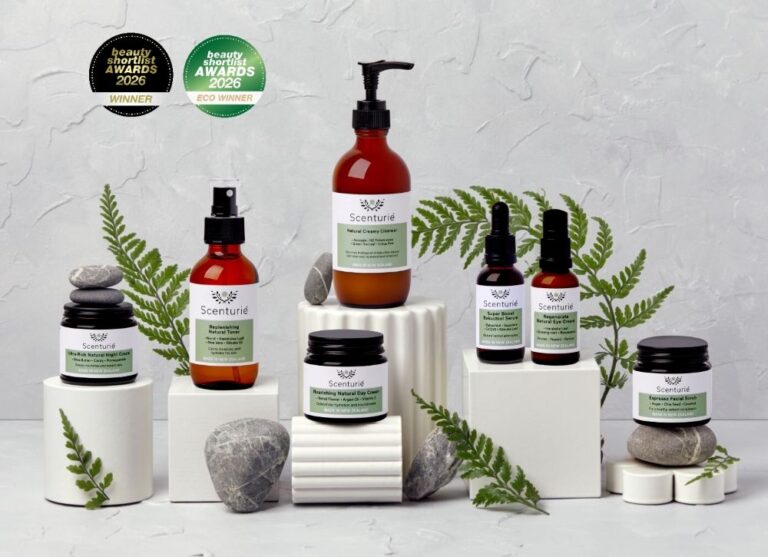
At Scenturie, we believe that high-performance skincare must never come at the expense of planetary health. As a cosmetic formulator, I built our entire brand ethos around closed-loop, sustainable solutions that do the heavy lifting for you:
- Formulated Free from Unsustainable Palm Oil: Palm oil derivatives (such as hidden cetyl alcohol, stearic acid, or surfactants) are pervasive across the cosmetic industry, driving catastrophic tropical deforestation and habitat loss. We drew an uncompromising line: every Scenturie product is formulated without unsustainable palm oil, ensuring your daily routine protects critical biodiversity.
- An Infinitely Recyclable “Glass-First” Standard: Plastic degrades each time it is reprocessed, eventually becoming brittle microplastic. Glass, by contrast, is an inert, infinitely recyclable material derived from natural silica. We house our active botanical creams and serums in protective amber glass that preserves natural botanical potency while preventing plastic contamination.
- The Aluminium Refill Model: Mechanical lotion pumps and glass droppers inherently require small internal plastic components to function. Instead of discarding a pump every time you repurchase, our plastic-free refills allows you to keep your functional pump and purchase future bottles sealed with 100% recyclable aluminium lids. This simple change keeps functional plastic out of the waste stream indefinitely.
- The Scenturie Loop – Circularity in Action: Recognised as a Silver Winner at the 2026 Clean + Conscious Awards, our closed-loop initiative ensures your packaging never touches a landfill. Through our return-and-reward program, you can send your clean, empty glass jars and bottles back to our Auckland studio. We professionally wash, inspect, sterilise, and refill them, keeping materials circulating within Aotearoa.
Formulator’s Eco-Tip: Audit your bathroom for “water weight.” Many conventional lotions are up to 80% water bound with synthetic fillers, meaning you are paying to ship heavy liquids across the globe. Concentrated, anhydrous serums and rich botanical creams require less packaging and last twice as long per jar.
Quick Swaps: Your Low-Waste Bathroom Starter Guide
| Traditional Habit | Sustainable Scenturie Swap | Environmental Impact |
| Disposable face wipes | Organic cotton face cloth & Natural Creamy Cleanser | Eliminates synthetic microfibres in municipal wastewater |
| Plastic pump bottles every month | Aluminium Refill Caps for Serums & Cleansers | Cuts domestic rigid plastic waste by over 80% |
| Synthetic petroleum balms | Ultra-Rich Natural Night Cream in amber glass | Plastic-free packaging; biodegradable plant lipids |
| Landfilled empty packaging | The Scenturie Loop Return Programme | True closed-loop reuse within New Zealand |
Your Daily Choices Are Your Superpower
Sustainability is not about self-denial; it is about choosing living systems with care and intentionality.
Choose one small practice from this guide to focus on this week. Once that becomes second nature, adopt another. Your consistent daily choices, joined with thousands of other conscious Kiwis, create the meaningful momentum needed to protect and preserve our precious Aotearoa.
A Simple Guide to Sustainable Living in Aotearoa Read More »