
Updated September 2026
Clay has been revered in skincare rituals for millennia, but its therapeutic properties go far beyond ancient folklore. Beneath the surface, clay is a complex, bio-mineral powerhouse capable of rebalancing congested pores, soothing stubborn irritation, and revitalising sluggish skin cells.
Yet not all clays behave the same way on human skin. Depending on mineral structure and extraction methods, a clay mask can range from intensely astringent to deeply soothing and barrier-supportive.
Here is the science behind how therapeutic clays work, why geological origin matters, and how to harness this mineral ritual without compromising your skin’s moisture barrier.
How Clay Works on the Skin: The Cation Exchange
To understand how clay purifies, look at its molecular charge.
Most toxins, airborne pollutants, environmental debris, and oxidised sebum carry a positive electrical charge. When pristine clay minerals are hydrated with water, their molecular platelets expand and generate a powerful negative ionic charge.
This difference creates an electrochemical attraction known as cation exchange:
Absorption & Adsorption: The clay acts like a microscopic magnet. It draws positively charged impurities, excess surface oils, and cellular debris into its porous structure (absorption) while binding environmental pollutants to its mineral surface (adsorption).
Bio-Mineral Infusion: As the clay lifts stagnant buildup, it releases trace minerals—primarily silica, magnesium, calcium, and potassium—directly into the upper layers of the epidermis.
Micro-Exfoliation: Unlike sharp walnut shells or aggressive acid peels, hydrated clay particles possess smooth, micro-fine edges that lift keratinised dead cells without causing microscopic tears in the stratum corneum.
The Spectrum of Clays: Which Is Right for Your Skin?
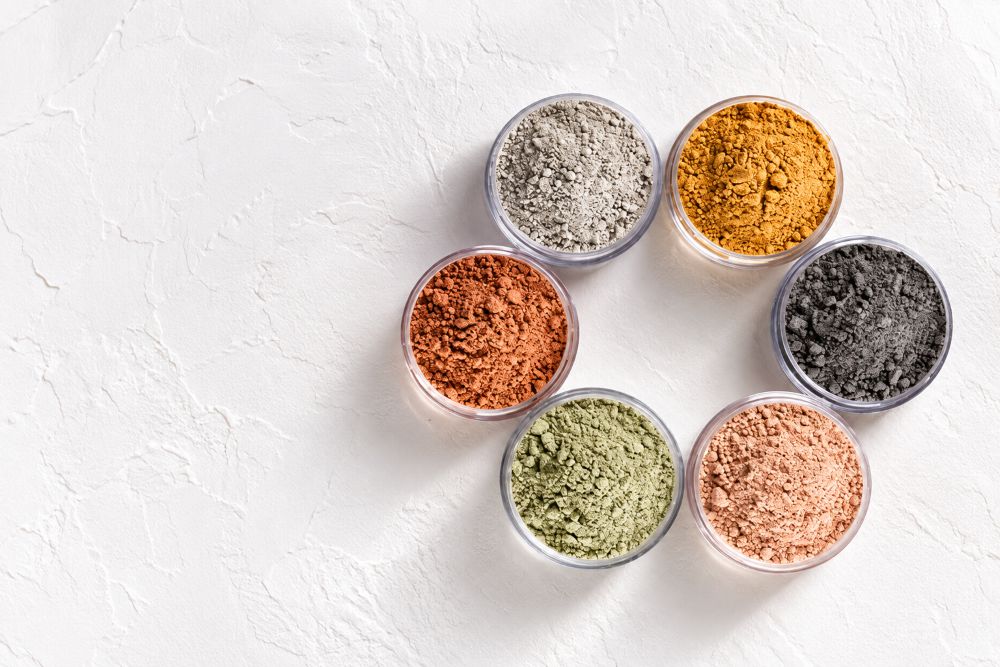
The therapeutic effect of a clay mask depends entirely on its mineral composition and density:
Kaolin Clay (White / Pink): The mildest of all cosmetic clays. It has a low cation exchange capacity, making it gentle, minimally drying, and suitable for delicate or reactive skin.
French Green Clay (Illite / Montmorillonite): Rich in decomposed plant matter and iron oxides. Highly absorbent and astringent, making it effective for oil-slick skin, though occasionally too stripping for sensitive barriers.
Rhassoul (Ghassoul) Clay: Mined from the Atlas Mountains of Morocco. Rich in silica and magnesium, it forms a silky paste that cleanses without depleting natural lipids.
Bentonite Clay: Formed from weathered volcanic ash. It possesses the strongest swelling capacity and highest negative charge of any clay, making it the gold standard for deep pore clearing and drawing out impurities.
Why New Zealand Glacial Clay is Geologically Superior
Not all bentonite clays are identical. Origin and purity dictate both safety and performance.
Tucked along the foothills of the pristine Southern Alps of Aotearoa, New Zealand Glacial Clay is a high-purity, rare montmorillonite bentonite formed over three million years ago through a combination of volcanic activity and glacial movement.

       Millions of Years of Volcanic Ash + Glacial Pressure
                               │
                               ▼
            High Cation Exchange Capacity (CEC)
      (Strong negative charge draws out positively charged debris)
                               │
                               ▼
        Exceptional Bio-Available Silica & Trace Minerals
          (Supports collagen integrity and tissue resilience)
Unrivalled Mineral Purity: Sheltered from industrial pollution, NZ glacial clay retains a pure mineral profile rich in bio-available silica—a key building block required by skin cells to support collagen synthesis and elasticity.
Natural Anti-Inflammatory Action: Because of its unique balance of magnesium and calcium ions, New Zealand glacial clay calms flare-ups and eases redness rather than provoking irritation.
Gentle Osmotic Action: It purifies without triggering the rebound sebum production often caused by harsh synthetic cleansers.
The Formulator’s Secret: Why Dry Powder Outperforms Pre-Mixed Wet Masks
Most commercial clay masks sit on store shelves as wet pastes in plastic tubs. To keep wet clay from breeding mould and bacteria, manufacturers must load them with synthetic preservatives, emulsifiers, and stabilisers. Furthermore, active botanical extracts degrade quickly once suspended in water.
By formulating Scenturie Clay Face Mask Calm as an anhydrous (dry) powder, the ingredients remain in their purest, most potent state until the moment you activate them:
Pure Organic Coconut Milk: Delivers skin-smoothing medium-chain fatty acids that prevent the clay from over-drying the epidermis.
Sea Buckthorn Fruit: Packed with rare Omega-7 and beta-carotene to stimulate tissue repair and impart a radiant glow.
Mango Fruit & Aloe Vera: Concentrated plant enzymes and polysaccharides soothe inflammation and help restore cellular hydration.
The 4 Golden Rules of Applying a Clay Mask
Avoid the common mistake that leaves skin red, dry, and irritated:
1. Never Let It Dry to the “Flaking Stage”
A clay mask works in three phases:
The Wet Phase: Your skin drinks in the bio-minerals and botanical nutrients.
The Cooling Phase: Capillaries contract, circulation quickens, and the clay binds surface oil and debris.
The Dry Phase: Moisture is drawn out of the skin, causing dehydration and irritation.
Formulator Rule: Always rinse your mask while it is still damp and slightly tacky to the touch (usually 8 to 12 minutes). If it starts cracking or flaking into dust, it has been left on too long.
2. Mix with Non-Metallic Utensils
Because active bentonite clay carries an electrical charge, avoid using metal spoons or bowls to mix your paste. Use ceramic, glass, or wood to keep the ionic charge active for your skin.
3. Steam Beforehand, Not After
Applying your mask immediately after a warm shower—when pores are relaxed and keratin is soft—allows the clay to clear congestion effortlessly.
4. Seal the Mineral Channel Immediately
After rinsing with lukewarm water, your skin is clean, receptive, and slightly permeable. Immediately press 3–4 drops of Revitalising Face Oil or Super Boost Bakuchiol Serum into damp skin to lock in hydration and reinforce the lipid barrier.
How to Use Scenturie Clay Face Mask Calm
Transform your weekly skincare routine into a restorative home-spa ritual:

Activate: In a small dish, blend 2 level teaspoons of Calm mask powder with approximately 1 tablespoon of water until a smooth, velvety paste forms.
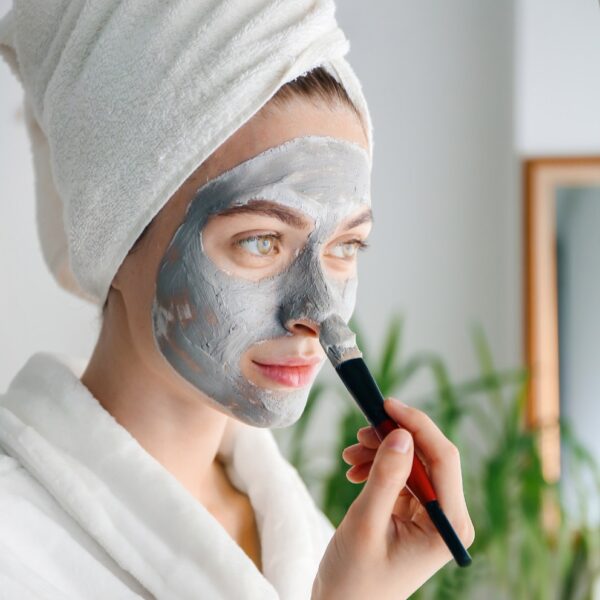
Apply: Using a soft brush or clean fingertips, sweep an even layer over the face and neck, avoiding eyes and lips.
Rest: Relax for 10 to 12 minutes.
Melt Away: Re-hydrate the mask by pressing a warm, damp cloth against your face to soften the clay, then gently wipe clean.
Nourish: Complete your ritual with 2–3 drops of Scenturie Super Boost Bakuchiol Serum or Revitalising Face Oil, followed by Nourishing Natural Day Cream or Ultra-Rich Natural Night Cream.
What Our Community Says
“I am in my 50’s and I use this clay face mask once every fortnight. I love the immediate cooling effect and the time I take just for myself during this little self ritual. It does wonders for my skin leaving it brighter, deeply cleansed, and beautifully calm. I just love it!” – Tanya T
“I often get redness around my nose and chin due to hormonal changes. This mask is the only thing that actually settles the heat in my skin. It use it regularly for my hormonal breakouts and it is calming and nourishing.” – Gloria H